

Updated December 1, 2025
Battery health checks are familiar in consumer devices like smartphones, where built-in indicators show when service or replacement is needed. But the importance of battery health checks in energy storage and e-mobility goes far beyond personal gadgets. For large-scale energy storage systems and electric vehicles, these checks are essential to ensure safety, efficiency, and longevity.
This article explores why health checks matter, the main issues that affect battery life, and how modern analytics improve predictive maintenance.
Why Battery Health Checks Matter in Energy Storage and E-Mobility
In industrial applications, battery health checks rely on diagnostic tests and monitoring techniques to assess deployed batteries. One common method is the open circuit voltage (OCV) test, which measures voltage without a load or charger. Significant deviations can indicate problems such as sulfation, internal shorts, or cell imbalance.
Health checks also monitor battery aging, caused by temperature fluctuations, repeated charge–discharge cycles, and chemical reactions. Access to high-resolution data makes it possible to identify issues early, prevent failures, and extend system lifespan.
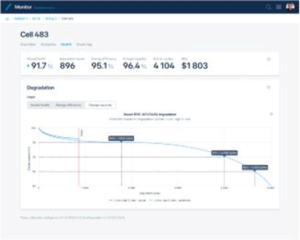
Solutions such as Peaxy Predict can provide insights into lithium ion battery health with state of health (SOH) comparisons between expected and actual, and degradation forecasting.
Key Issues That Impact Battery Health
Thermal Degradation
High operating temperatures accelerate chemical reactions inside the battery. This leads to electrode breakdown, electrolyte decomposition, and reduced efficiency. For example, operating a lithium-ion battery at 45°C instead of 25°C can reduce lifespan by up to 50%.
Poor thermal management, high charging rates, and harsh environments all increase the risk. Effective cooling systems and optimized charging protocols are critical to reduce degradation.
Lithium Plating
Lithium plating occurs when ions deposit on the anode during charging, often at high rates or low temperatures. It reduces capacity, raises resistance, and can cause short circuits or thermal runaway.
Research from Purdue University found that fast charging can reduce a battery’s lifespan by up to 20% due to lithium plating. The University of Warwick showed it can increase the loss of lithium inventory (LLI) and loss of active material (LAM) by 10–12%. These findings highlight the importance of optimized charging protocols and better management systems.
Predicting Battery Health Using Analytics and Machine Learning
Modern analytics and machine learning now enable predictive maintenance. By analyzing large datasets from battery operations, algorithms identify patterns and forecast performance.
Peaxy Predict is one solution that improves battery health checks in energy storage and e-mobility by combining diagnostic data with predictive analytics. It provides:
-
Anomaly detection: Identifies cells that deviate from fleet averages using KPIs like voltage, temperature, and state of health (SOH).
-
Forecasting: Projects failure points, remaining useful life (RUL), and degradation trends.
-
Actionable insights: Supports decisions on augmentation schedules and system dispatch.
McKinsey research shows predictive maintenance can cut costs by up to 25% and reduce unplanned outages by 50%. For operators, these insights improve safety, reliability, and long-term planning.
How Peaxy Predict Improves Battery Health Checks
Peaxy Predict integrates high-resolution sensor data with machine learning to monitor battery fleets across energy storage and mobility applications. Real-time insights help operators act before failures escalate, preventing costly downtime.
By threading together diagnostics, analytics, and forecasting, Peaxy Predict ensures that battery health checks in energy storage and e-mobility deliver measurable results. This holistic approach protects investments in clean energy while supporting more sustainable operations.

Peaxy Predict improves battery and system health with advanced analytics and machine learning. Anomaly detection identifies cells deviating significantly from the system mean with KPIs such as voltage, temperature and SOH. Runtime machine learning modules based on live metrics enable optimized battery augmentation schedules and improved dispatch decisions.
Conclusion: Protecting Investments with Better Battery Health Management
Battery health checks are essential to maximize the performance and lifespan of critical energy assets. From preventing thermal degradation to detecting lithium plating, they address key risks that affect safety and efficiency. With advanced analytics and predictive models from tools like Peaxy Predict, organizations can extend battery life, improve reliability, and safeguard significant energy investments.
Frequently Asked Questions
What are battery health checks in energy storage and e-mobility?
They are diagnostic and monitoring practices that track the condition of large-scale batteries. These checks prevent failures, extend lifespan, and ensure safety.
What are the biggest risks to battery health?
Thermal degradation and lithium plating are two leading causes of reduced performance, higher failure risk, and shorter battery lifespan.
How do analytics improve battery health checks?
Analytics and machine learning predict failures before they occur, optimize charging protocols, and improve decisions about maintenance and system upgrades.
What role does Peaxy Predict play?
Peaxy Predict combines diagnostics, anomaly detection, and forecasting into one solution. It enhances reliability, reduces downtime, and ensures cost-effective operations.