

Commissioning is one of the most critical phases of deploying a new energy storage system, and it is also one of the most data-intensive. Access to high-quality, real-time information allows operators to verify performance, validate system readiness, and identify early issues that could compromise long-term reliability. Today, battery assembly data analytics gives operators a powerful advantage by revealing how each cell, module, and string behaves under load. With this data in hand, teams can fine-tune charging profiles and detect outliers. They can also ensure the asset is configured for optimal lifetime performance.
By viewing commissioning not just as a procedural step but as a data-driven evaluation, operators can establish a solid performance baseline. This influences safety, efficiency, warranty compliance, and financial outcomes for the entire lifecycle of the system.
Using Battery Assembly Data Analytics to Validate System Health During Commissioning
Commissioning relies on precise measurements: voltage stability, temperature behavior, impedance, current response, and thermal balancing across the system. Battery assembly data analytics allows engineers to confirm whether each pack is operating within expected tolerances. It also allows them to identify units that deviate from baseline conditions. These insights help uncover early issues such as inconsistent cell balancing, and thermal gradients within cabinets. In addition, they can identify loose connections, unexpected resistance changes, or manufacturing defects that escaped upstream quality checks.
By comparing performance during commissioning against both factory-validated models and fleet benchmarks, operators gain the clarity needed to approve the system for full operation. They also have the option to halt and address anomalies before they evolve into safety or reliability risks.
How Battery Data Helps Optimize Charging Strategies
Battery Data for Commissioning and Charging Optimization
Once the system is commissioned, operators can use granular data to refine how the batteries charge and discharge. Charging curves differ depending on chemistry, age, temperature, and load conditions. Data-driven analysis helps determine the ideal charge rates, taper points, and temperature management strategies to improve efficiency and reduce long-term degradation.
By analyzing trends in State of Charge (SoC), State of Health (SoH), and voltage behavior under different loads, operators can identify the charge regimes that minimize stress on the battery. For example, avoiding unnecessary full charges, optimizing C-rates based on thermal conditions, or dynamically adjusting charging parameters during peak demand events can meaningfully extend battery life and reduce operating cost.
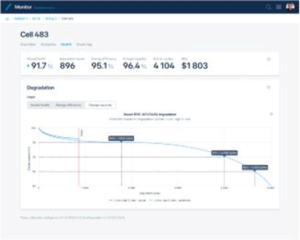
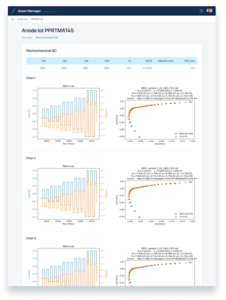
Battery analytics applied during commissioning can provide valuable insights that would otherwise be left to guesswork. Peaxy’s solution brings disparate data sources together into a single normalized, parameterized view to empower engineers to make informed decisions, ensuring that these systems operate efficiently throughout their lifecycle, and most importantly that high value assets are protected from early or unexpected failure. Example outputs illustrate automated feature extraction for battery metrology and cyclers, and degradation and SoH details.
Identifying Outliers and Weak Packs Early
Even within a new installation, there are variations between battery units. Some may age faster, heat more quickly, or exhibit abnormal impedance growth. Battery data helps detect these outliers before they pose a risk to safety or performance. Operators can isolate problematic packs, schedule targeted maintenance, or adjust charging strategies to avoid further accelerating degradation.
This early detection prevents the cascading effects of mismatched pack behavior, such as imbalanced strings, increased thermal stress, or reduced available energy during peak operations.
Improving Predictive Maintenance and Reducing Long-Term Costs
Commissioning data feeds directly into long-term predictive models. Once a reliable baseline is established, any deviation from expected behavior becomes easier to detect. Over months or years, operators can track how environmental conditions, duty cycles, and charging decisions influence the health of each battery.
With predictive analytics integrated into day-to-day operations, teams can anticipate maintenance needs. They can also schedule interventions during low-demand periods, and prevent costly unplanned outages. Optimized charging strategies guided by real-world data reduce long-term cycling stress, improving system availability and lowering total cost of ownership.
Supporting Compliance, Warranty Tracking, and Safety
Commissioning documentation is often required for warranty validation, regulatory compliance, and safety audits. Battery data serves as an objective, time-stamped record that shows exactly how the system behaved during initial startup. Such data helps prove that all parameters were within acceptable limits.
Over the system’s life, this data supports verification for warranty claims, Root Cause Analysis (RCA), insurance reviews, and grid service qualification. Maintaining a clean, well-organized data history is now considered a best practice for operators participating in energy markets or pursuing long-duration safety certification.
Integrating Battery Data Into the Operational Workflow
Battery data is most powerful when integrated into existing operational workflows. Real-time dashboards, alerts, and automated analysis pipelines help operators see changes as they happen, not weeks later during routine reviews. Centralizing this data across sites allows portfolios to be managed more consistently. It provides a richer dataset for improving charging strategies across an entire fleet.
Over time, insights from one installation can inform best practices for another, accelerating continuous improvement and reducing the learning curve as deployments scale.
Frequently Asked Questions (FAQ)
Why is battery data so important during commissioning?
It provides a baseline of health, performance, and behavior that is essential for identifying issues early and ensuring the system meets operational and safety requirements.
How does battery data improve charging strategies?
By revealing how batteries respond to different charge rates and thermal conditions, data helps identify the most efficient and least stressful charging regimes.
Can battery data reduce long-term maintenance costs?
Yes. Data-driven charging and monitoring reduce degradation, minimize unplanned failures, and support predictive maintenance.
Does battery data support warranty and compliance requirements?
Absolutely. Commissioning data provides proof of proper setup and ongoing operational compliance—critical for warranty claims and regulatory audits.
What types of data matter most during commissioning?
Key metrics include voltage, current, temperature, impedance, balancing behavior, thermal gradients, and initial SoH estimates.